



Background verification checks for India hiring
Get Aadhaar-based right to work verification, alongside all your essential BGV checks for India and beyond.













Checks and features
Simplify your global hiring with India-ready checks

Aadhaar card RTW verification
Zinc accepts Aadhaar cards as eligible proof for right to work, so candidates get a streamlined system and you get results faster.

Instant employment verification
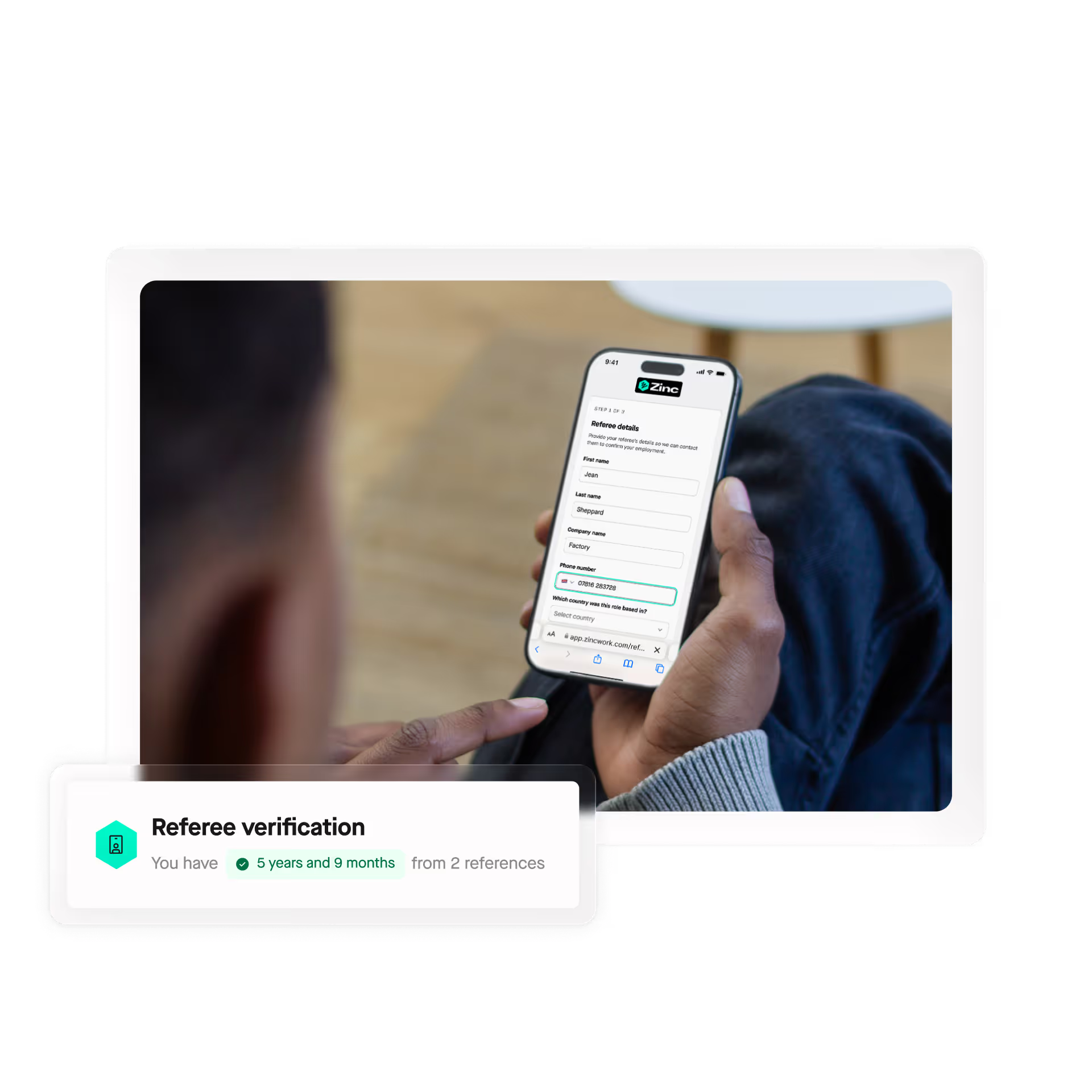
Check your candidate's work history instantly through our direct integration with EPFO, and spot dual employment in seconds.

Dedicated compliance support
Over 7% of Zinc’s headcount is dedicated to legal, compliance, and data security. They’re here to help you untangle complex requirements so you can stay up-to-date.

9.6
/10


7
hours
Average criminal check completion
6
days
Average education check completion

One platform for a global team
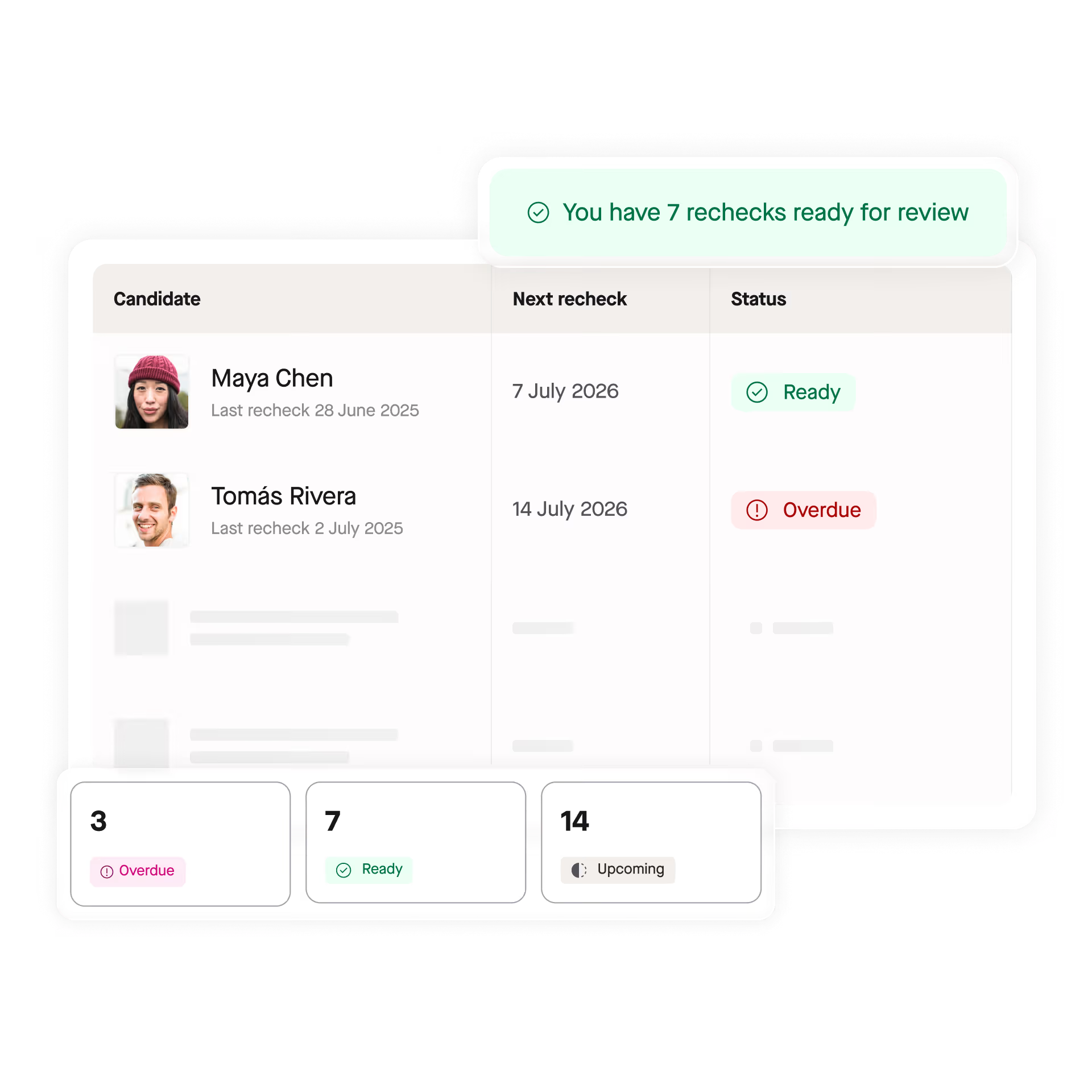
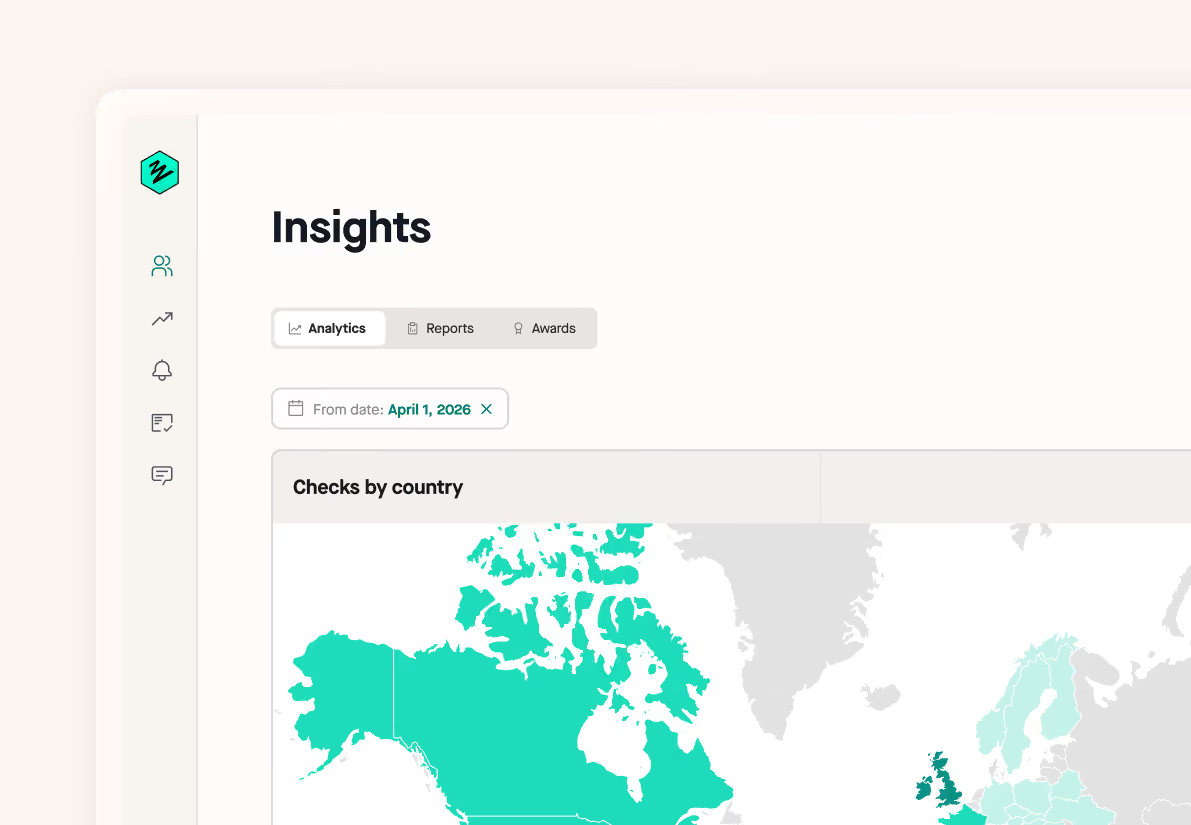
Zinc’s platform helps you route candidates through the correct path for their country — avoiding unnecessary information or hours pouring over local regulations. Results come back to a central dashboard, giving your whole team a view of hiring.

Fast, efficient checks
Spot dual employment and verify right to work in seconds with Zinc. 65% of our checks return near-instant results, and our industry-leading turnaround times get your whole team working faster.

Transparent pricing at scale
Whether you’re hiring a little or a lot, Zinc’s pricing is easy to understand. Flat fees for checks and rolling credit means you’re never caught out on an invoice, and all our integrations and support are included at no extra cost.


“We have been using Zinc for nearly 2 years now and it has made a world of difference with our onboarding. Zinc saves us a huge amount of time, takes the admin off our team along with having all the references in one place. We can click a button and everything is done for us. We’ll never go back to manual reference checking.”

Checks that work everywhere you do
Full visibility, transparent pricing, and adaptable checks for borderless hiring.
Industry-leading global turnaround times
Adaptive checks, not extra admin
Integrated with your HR tech stack
Truly transparent pricing



Pricing
Built for global teams
Whether you're a growing team or an enterprise hiring across borders, Zinc has a plan for you.

Under 20 hires annually
Pay As You Grow
Get started in minutes. Our Pay As You Grow plan is built for lower hiring volumes — a flat rate per check, with no hidden costs or setup fees.

Start checking in minutes, no setup needed
Flat rates per check, no hidden fees
Pay only for what you check, every month

20+ hires annually
Custom solutions
For larger volumes, our experts build a plan around your needs. Credit is flexible with your hiring and never expires, with integrations, setup, training, and support all included for free.
A custom plan built around your hiring
Credit pool that rolls over and never expires
Integrations, setup, and training included for free




What is background verification (BGV) in India?
Background verification (BGV) is India's standard pre-employment screening process. It covers employment history, education, criminal court search, identity (via Aadhaar and PAN), and address verification. It's the norm across technology, business process outsourcing, and financial services hiring, and recent DPDP rules have tightened the consent requirements around it. With Zinc, you can combine all these checks into one reusable package,, so the process holds whether you're screening ten hires or ten thousand.
How does Zinc verify employment history in India?
Zinc verifies employment history in India via EPFO (Employees' Provident Fund Organisation) instant employment verification, pulling data straight from government provident fund records through the same route used for Zinc's UK HMRC check.
The connection runs through Zinc's data partner, Mistho, which holds a direct API link into EPFO, and Zinc never sees or stores the candidate's login details. It's also built to flag dual employment, where a candidate is registered with more than one employer at the same time. If a candidate doesn't have an EPFO account, they can switch to manual HR references instead, so the check still gets done.
What is the DPDP Act and how does it affect BGV in India?
The DPDP Act, or Digital Personal Data Protection Act 2023 (with DPDP Rules 2025), is India's data protection law, and it affects BGV by requiring a standalone consent notice, separate from the employment contract, before collecting personal data for background verification.
Consent must be specific, informed, and freely given. It can't be folded into other paperwork, and you have to have it before running checks with Zinc. Zinc’s customisable self-certification allows you to upload documents like this consent form, so everything’s in one place in case of an audit.
Does Zinc accept Aadhaar for right-to-work verification?
Yes, Zinc accepts Aadhaar and PAN cards as valid right to work proof for Indian nationals, and candidates can upload either straight through Zinc's platform. Citizens by birth automatically hold the right to work in India, so these are simply the documents most people already have to hand.
Zinc also accepts a Voter ID or e-EPIC card, birth certificate, Overseas Citizen of India (OCI) card, or domicile certificate (alongside a passport or other nationality document) as alternatives, with an Employment Visa required for foreign nationals instead. A clear result means the uploaded document passed anti-spoofing and facial similarity checks. Anything that can't be verified digitally comes back as ‘consider’, flagging it for a closer look rather than an automatic decision, so the final decision is always in your hands.
How quickly does Zinc complete criminal checks in India?
Zinc completes criminal checks in India in less than a day on average, so it's rarely the thing holding up your hire.
The check covers a seven-year lookback via the Courts and Tribunals of India: High Court, Sessions Court, Magistrate Court, and Supreme Court records. Zinc searches these court databases directly in the candidate's place of residence, cross-matches any hits against the details the candidate provided, and returns a signed digital report once the case is closed so you can make the final hiring decision.