


Global sanctions checks
Avoid serious compliance and reputational risks before new candidates start. Zinc’s sanctions checks help you create clear due diligence documentation, understand potential hiring risks, and avoid criminal penalties.

Screen candidates against global sanctions lists

Save candidate reports straight to your ATS or HRIS, creating a clear audit trail

Get results in 1 to 2 minutes

What you need to know
Turnaround times
Available in
195 countries
Including
UK
USA
France
Germany
Netherlands
and more








Entering into prohibited business relationships can have serious reputational, financial, and legal consequences. Sanctions checks help you avoid the risk.

Know exactly who you’re hiring
Alongside PEP checks and adverse media checks, sanctions checks give you a strong view of potential reputational risks associated with a candidate. Ensure the right candidates have access to financial systems, client relationships, and sensitive data.

Avoid serious fines
Employing someone on a sanctions list can have big consequences, including asset freezes, regulatory penalties, and even criminal liability. In the UK, breaches can lead to fines of up to £1 million, or even prison sentences in severe cases.

Keep a crystal-clear audit trail
Sanctions lists are ever-evolving. Running automated sanctions checks and rechecks help organisations in regulated sectors or global markets keep a strong audit trail, so if the worst case scenario happens, you know your company is protected.

See it in action
Book a demo and choose a time to speak with one of our experts about a custom solution for your business.

32
minutes

Average turnaround time

75,158
Sanctions checks run with Zinc (so far)

195
countries
Supported by Zinc
Get fast, secure global sanctions checks results delivered straight to your ATS or HRIS and reduce hiring risk.
Safe and secure sanctions results
Tailored check packages for global compliance
Stay one step ahead of risk
Smooth candidate experience


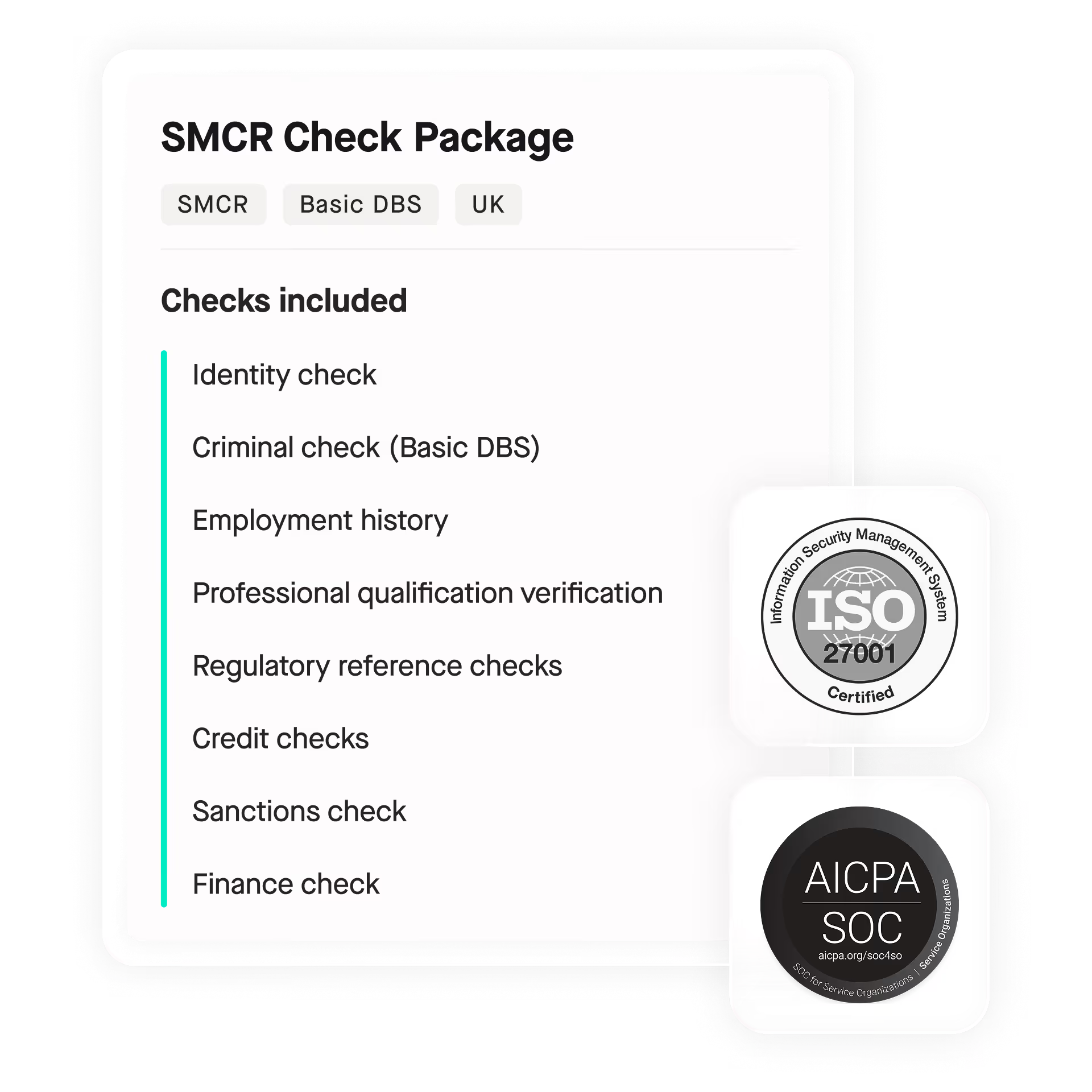

SMCR, accelerated.
“A lot of our SMCR checks have been completed quicker. These checks go out to a lot of the more senior people in the business, and it was really nice to get feedback from them that it took less of their time up to get those checks done.”

Protect your business from reputational or business impacts in one simple workflow.
Step one
Once you select your package, sanctions checks run automatically. We use the candidate’s name and identity details, already collected during ID verification, to run the search. You don’t need to do anything extra.
Step two
We screen the candidate against a watchlist that includes lists from OFSI, the United Nations, and the EU. A fuzzy name matching algorithm accounts for name variations, so potential matches aren’t missed because of a spelling difference.
Step three
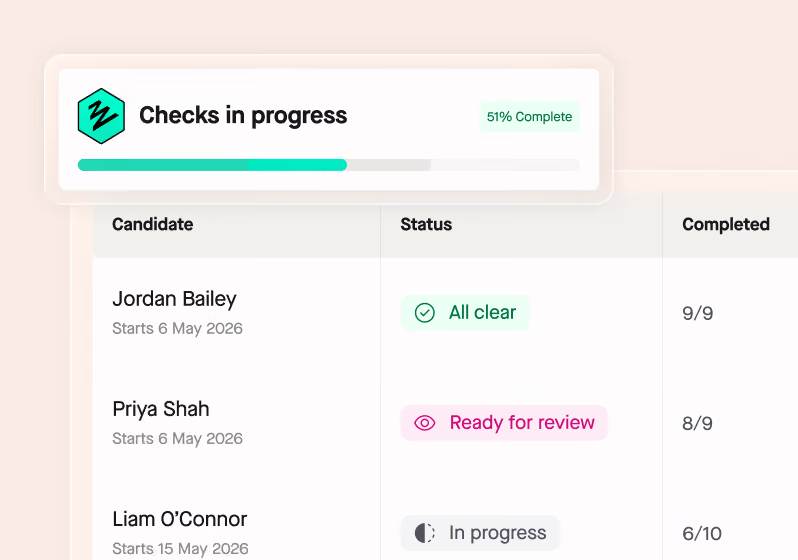
Any potential match is flagged in your dashboard for review. Common names can generate false positives, so your team has the final review before making any decisions. Most organisations run sanctions checks alongside PEP and adverse media screening for a full compliance picture.



Integrations
Background checks, integrated
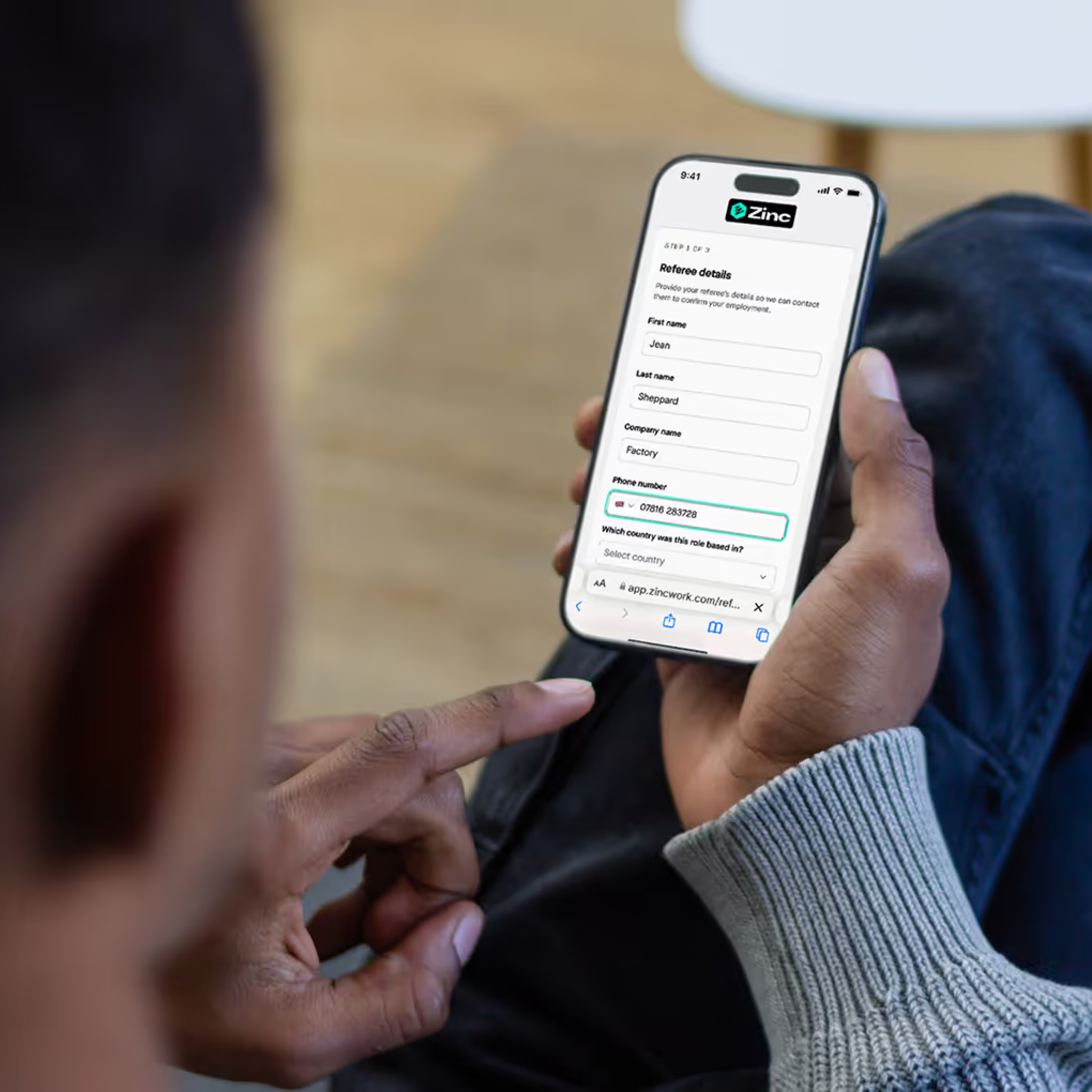
Zinc connects directly with your ATS or HRIS at no additional cost. Send checks, get results, and store reports without leaving your preferred platform.
Why businesses love using Zinc



%%An intuitive, easy platform%% with support that's far quicker than other providers. The answers are always reliable, especially when we're dealing with different countries.

%%The candidate experience is excellent.%% Integration was straightforward, the pricing is among the best on the market, and support is quick and consistently helpful.

%%It automates the screening of new employees%% and integrates well with our ATS and HRIS. The initial setup was super easy and we're really happy with the product.
Onboarding takes just a few minutes and %%running checks for international contractors is seamless%%. The pay-per-use model is a huge plus for a small company like ours.
%%It has made my role, and my colleagues' day to day, much easier and more efficient%%, while significantly improving the overall experience for our candidates.
Checks and paperwork sync automatically with our recruitment and HR systems, %%saving us so much time%% not having to check multiple systems. The support teams are always incredibly helpful.
For teams of every size
Flexible background checks
Whether you’re hiring a little or a lot.

Under 20 hires annually
Pay As You Grow
Get started in minutes. Our Pay As You Grow plan is built for lower hiring volumes — a flat rate per check, with no hidden costs or setup fees.

Start checking in minutes, no setup needed
Flat rate per check, no hidden fees
Pay only for what you use
20+ hires annually
Custom solutions
For larger volumes, our experts build a package around your needs. Flexible with your hiring and never expires, with integrations, setup, training, and support all included free.
A custom package built around your hiring
Credit pool that never expires or rolls over
Integrations, setup, and training included free
More from Zinc
Check out more resources, straight from our experts




Start screening in days, not weeks
Combine this check with right to work, references, criminal records and more, across 195 countries, in a single candidate journey.
Which watchlists and databases does Zinc screen for sanctions?
Zinc screens candidates against global sanctions lists using a check powered by Entrust (formerly Onfido).
The check covers lists maintained by the UK Office of Financial Sanctions Implementation (OFSI), the United Nations Security Council, and the European Union, among others.
Lists are updated as new designations are made and existing ones are lifted. Zinc's screening reflects the current state of each list rather than a periodic snapshot.
A fuzzy name matching algorithm accounts for name variations and transliterations, so potential matches aren't missed because of a minor spelling difference. Any potential match gets flagged in your dashboard for your team to review before any action is taken.
What are the UK penalties for employing someone on a sanctions list?
Under the Sanctions and Anti-Money Laundering Act 2018, employing or doing business with a designated individual can result in fines of up to £1 million, or up to 50% of the estimated value of the breach, whichever is higher.
In serious cases, criminal prosecution is possible, with imprisonment of up to seven years. As of April 2025, the UK Office of Financial Sanctions Implementation reported £37 billion worth of assets frozen.
The consequences extend well beyond the immediate fine. Asset freezes, regulatory investigation, loss of operating licences, and reputational damage are all on the table.
Running automated sanctions checks at point of hire, and repeating them when watchlists are updated, is the most practical way to demonstrate ongoing due diligence.
What is the difference between a sanctions check and a PEP check for employers?
Sanctions checks and PEP checks address different types of risk.
A sanctions check is a legal compliance check. It identifies whether a candidate is subject to government-imposed restrictions that would make engaging them legally prohibited. A sanctions match is a legal barrier, not a flag for review.
A PEP check is a risk management check. It identifies whether a candidate holds, or has previously held, a position of political significance that increases their vulnerability to financial crime or outside influence. A PEP match doesn't prevent a hire. It means the appointment warrants enhanced scrutiny.
The two checks are complementary and usually run together, often alongside adverse media screening, as part of a complete due diligence package for senior or regulated appointments.
What happens in Zinc when a candidate matches a sanctions list?
When Zinc identifies a potential match, it's flagged in your dashboard for review. Zinc uses fuzzy name matching, which means candidates with common names can generate a 'possible match' that turns out to be a different individual.
If a match is confirmed as genuine, employing that individual would constitute a sanctions breach, and you should take legal advice before proceeding. Zinc creates a documented audit trail of your screening and review process, which is the evidence you need to demonstrate due diligence if a compliance question ever arises.
How often should employers repeat sanctions screening after the initial hire check?
Sanctions lists are updated frequently, and a one-time check at hire may not be sufficient for roles where ongoing compliance is required.
FCA-regulated firms are expected to maintain ongoing monitoring as part of their anti-money laundering obligations. For roles with access to financial systems, procurement authority, or sensitive commercial relationships, periodic re-screening is good practice even outside formally regulated environments.
Zinc's platform supports automated rechecks, so rescreening at scale doesn't require manual intervention. A practical approach: run checks at point of hire, repeat when a candidate's role changes significantly, and schedule periodic checks at least annually for regulated or high-risk roles.
The strength of your compliance position depends partly on how recently the screening was last run.